WHAT'S IN A NAME?
Posted by Phil Murphy
For years, I’ve seen Ronald McDonald as the visible head of Ronald McDonald House, thinking that McDonald’s was doing a good thing for the parents and kids the House serves throughout the world. Only to discover that ain’t necessarily so. It’s a little more convoluted than that. Actually, the Ronald McDonald House has less to do with corporation whose name it bears and far more to do with the franchise owners themselves.
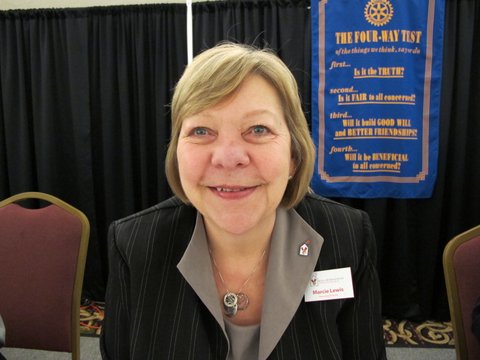 Marcie Lewis, Executive Director for Ronald McDonald House of Western Michigan, and our program leader, introduced by Steve Wade, tells it this way. It turns out that a McDonald’s franchise owner founded the original House in Philadelphia circa 1974. He engaged some other franchise owners to help the families of sick children, who needed a stress free environment away from the sterility of the hospitals they were virtually living in as their children were being cared for. It caught on and it was the franchise owners across the country and world who built what eventually became known as Ronald McDonald’s House.
That is not to say the corporate entity is not involved, but the percentage of involvement was truly a surprise as the Grand Rapids House, which serves all of Northwest Michigan and beyond, receives approximately 13% of its funding via the corporate charity. All the rest of its funding comes from myriad other sources. Government medical programs such as Medicare and Medicaid, other grants, individual contributions and franchise investment.
It is not a corporate requirement for franchises to support the Houses. That is totally up to them as individual store owners. And they do support in a big way. So maybe it is fair to let Ronald get the credit. His brand certainly doesn’t hurt and he has kept the eyes on the prize so to speak.
All that aside, most important are the people the House serves, and the relief they bring to families in need, many on the edge. A small price to pay for the help they offer and the easing they can bring to so many. Grand Traverse County families represent 20% of all those served. That was 90 families out of the 440 total over the year, at no cost to the guests. Saving families $155 per night. This translates into savings of $157,000 annually.
The program ended with a video of the touching story of a local family.